The Anafiotika Secret Stairs
February 4, 2026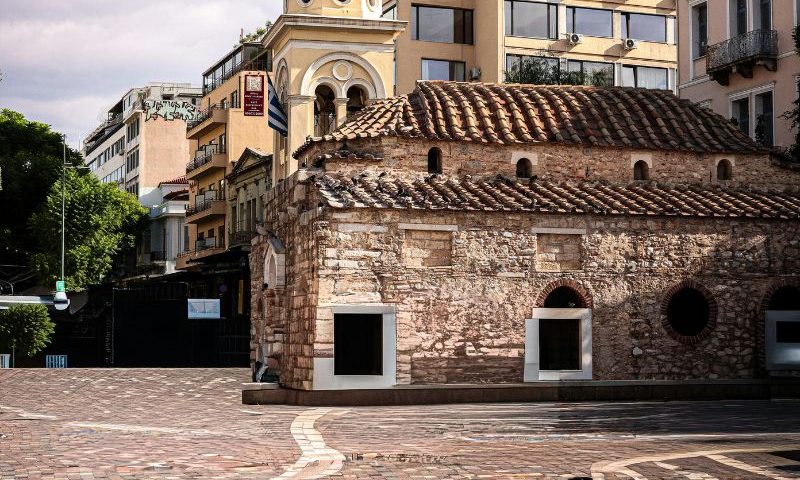
Table of Contents
Introduction
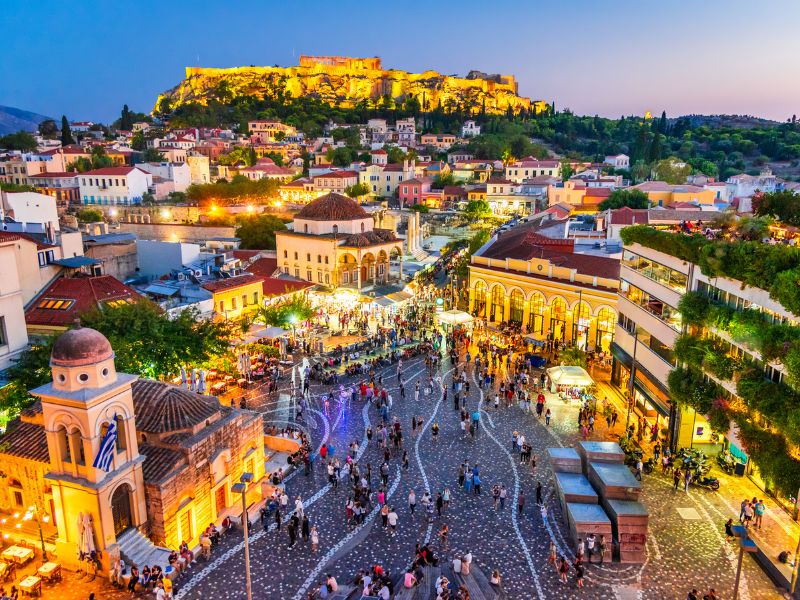
Monastiraki is one of those places in Athens that never seems to pause. Music drifts across the square, vendors negotiate prices with easy confidence, and the flea market pulls in visitors from every direction. At first glance, it feels unmistakably modern—busy, touristic, constantly in motion.
But if you slow down, another layer begins to surface. The Ottoman Traces of Monastiraki quietly shape the atmosphere of the neighbourhood, revealing centuries of trade, coexistence, and everyday routine. They are not immediately obvious, yet they are always there—woven into the streets, the buildings, and even the way the space functions today.
The Ottoman Traces of Monastiraki in the Heart of the City
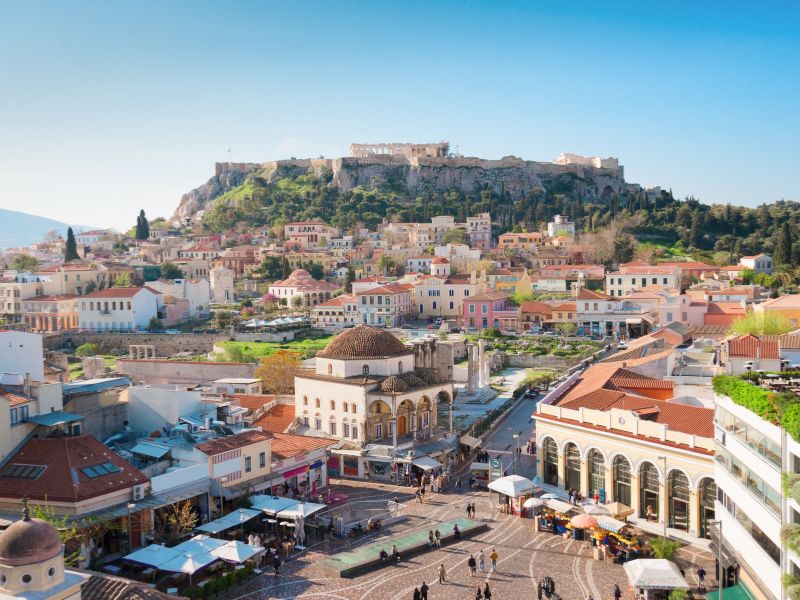
Monastiraki has long been a meeting point. For centuries, merchants, craftsmen, and travellers crossed paths here, exchanging goods as well as stories. During the Ottoman period, this commercial identity intensified, turning the area into one of the liveliest marketplaces in the city. Movement, bargaining, conversation—these defined the rhythm of daily life.
In the centre of the square stands the Tzistarakis Mosque, built in the eighteenth century. Once part of a thriving market complex, it now sits among cafés and souvenir shops. The contrast is striking but not jarring. The structure does not feel disconnected from its surroundings; instead, it feels absorbed into them, as if it has simply adapted to a new chapter of the same story.
A few steps away, near the Roman Agora, the Fethiye Mosque offers a different perspective on the Ottoman presence in Athens. Here, ancient ruins and Ottoman architecture stand side by side. The city did not replace one era with another—it accumulated them. Each period left visible marks, creating a landscape defined by continuity rather than rupture.
Everyday Life in Ottoman Athens
The Ottoman Traces of Monastiraki are not confined to prominent monuments. They also speak through places tied to daily routine. The Bathhouse of the Winds, the oldest surviving hammam in Athens, brings this dimension into focus.
Hammams were essential to urban life. They offered cleanliness, certainly, but also conversation, relaxation, and a sense of shared space. Much like modern cafés, they functioned as informal social hubs. News travelled quickly in such environments. Relationships formed there. Community was reinforced in quiet, ordinary ways.
Wander through the surrounding streets today and that continuity becomes easier to sense. The flea market still thrives on exchange. Antiques sit beside handmade objects and everyday items; old blends with new without ceremony. The products have changed over time, yet the underlying dynamic feels familiar. Voices rise and fall, footsteps echo on stone, and goods are displayed with care. The setting evolves, but the energy of commerce remains.
A Neighbourhood Shaped by Layers
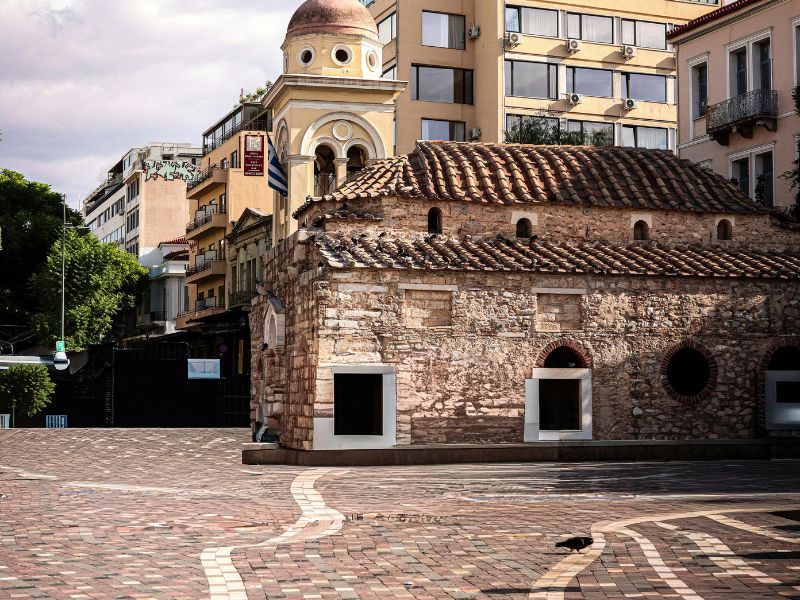
What defines Monastiraki is not a single landmark but the density of its layers. Within a short walk, visitors encounter the Roman Agora, Ottoman-era structures, and contemporary storefronts operating side by side. There is no strict separation between past and present. Instead, they overlap.
The Ottoman Traces of Monastiraki help explain this layered character. They show how the neighbourhood absorbed cultural and architectural influences over centuries without losing its central role in city life. History here is not distant or enclosed behind barriers; it participates in the everyday scene. Turning a corner can mean stepping briefly into another century—without ever leaving the present.
Conclusion
Most people experience Monastiraki as a vibrant square filled with movement and sound. Yet beneath that surface lies a more intricate narrative. The Ottoman Traces of Monastiraki deepen the understanding of the area, revealing patterns of trade, social interaction, and coexistence that continue to shape its identity.
Taking time to notice these traces changes the experience of the neighbourhood. The mosques, the hammam, and the market streets are not isolated remnants of a distant past. They remain part of the living fabric of the city, where the Ottoman Traces of Monastiraki persist—quietly present, still influencing the rhythm of everyday life.