

Acropolis Audio Guide – What You Hear & If You Need One
January 3, 2026
Acropolis Opening Hours & Last Entry (Updated 2026)
January 11, 2026
Table of Contents
Acropolis History
The Acropolis is not a single monument frozen in time. What visitors see today is the result of centuries of change, destruction, rebuilding and reuse. Over more than 3,000 years, the rock above Athens has carried different meanings and roles, often shaped by circumstance as much as by intention.
Many visitors are surprised by how much easier the site becomes to understand once a basic historical framework is in mind. Instead of isolated ruins, patterns start to appear.
1. The First Settlements on the Sacred Rock (c. 3000 BCE)
Long before temples or marble structures, the Acropolis History was already inhabited. Its height offered natural protection and wide visibility, which made it a practical choice for early settlements during the Bronze Age.
At this stage, the rock was not symbolic in the way it would later become. It was important simply because it worked.
2. The Mycenaean Fortress (c. 1400–1200 BCE)
During the Mycenaean period, the Acropolis took on a clearly defensive role. Strong fortification walls were built, and the hill became the political and military center of early Athens.
Most visitors are unaware that parts of these fortifications and Acropolis History still exist beneath later monuments, quietly supporting the structures above them.
3. The Rise of Athena’s Sanctuary (8th–6th century BCE)
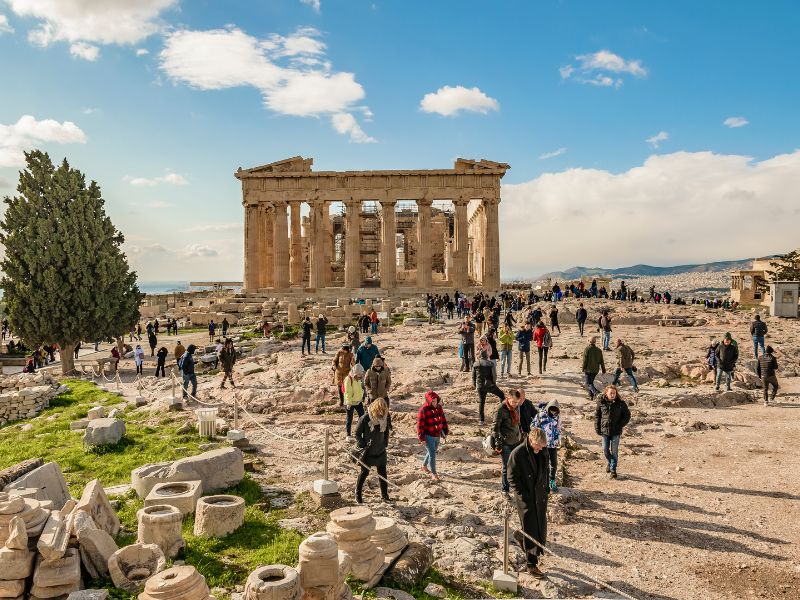
As Athens grew, the Acropolis began to change character. Defensive importance gradually gave way to religious significance.
Temples, altars and offerings dedicated to Athena appeared over time. This was not a sudden shift, but a slow transformation that redefined how the hill was used and understood.
4. Destruction by the Persians (480 BCE)
In 480 BCE, Persian forces invaded Athens and destroyed much of the Acropolis. Temples were burned, sculptures damaged and the sanctuary left largely in ruins.
What is less obvious to visitors is that Athenians deliberately chose not to erase all traces of this destruction. The damage itself became part of the site’s memory.
5. The Periclean Building Program (5th century BCE)
This is the period of the Acropolis History most people think of when they imagine the Acropolis.
Under Pericles, Athens undertook an ambitious rebuilding program. The Parthenon, Propylaea, Temple of Athena Nike and Erechtheion were all constructed during this time.
Although this phase was relatively short, it permanently shaped the appearance and identity of the Acropolis.
6. The Acropolis as a Classical Symbol (4th century BCE)
Once completed, the Acropolis became a symbol not only of Athens, but of broader Classical Greek ideals such as balance, harmony and civic pride.
Even in antiquity, the site was admired from afar, which helps explain why later rulers treated it with caution rather than redesigning it.
7. Roman Adaptations (1st century BCE – 3rd century CE)
When the Romans took control, they largely respected what already existed. Their interventions focused on repair and maintenance rather than transformation.
This restraint may seem unremarkable, but it played a key role in the Acropolis surviving largely intact into later centuries.
8. From Temple to Church and Mosque (Byzantine & Ottoman periods)
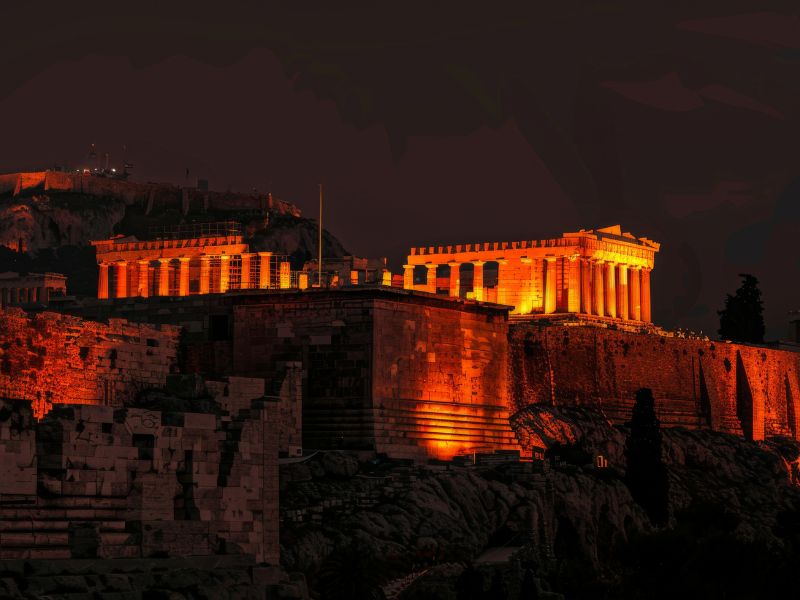
Over time in Acropolis History, the Parthenon adapted to changing religious needs.
It served first as a Christian church and later as a mosque. These uses altered interior spaces and details, even if those changes are not immediately visible today.
9. Explosion and Major Damage (1687)
In 1687, during a Venetian siege of Athens, the Parthenon was being used as a gunpowder store. An artillery strike triggered a massive explosion.
The destruction caused by this event explains much of the monument’s ruined appearance and is often the moment that surprises visitors the most.
10. Modern Greece and Restoration Efforts (19th century–Today)
After Greek independence, the Acropolis became a national symbol. Modern restoration efforts focus on stabilizing the monuments rather than reconstructing them.
This careful approach is why scaffolding and conservation work are often visible during visits.
Why Acropolis History Matters for Visitors

Understanding these key moments helps visitors make sense of what they see on the Acropolis. Ruins begin to feel intentional rather than random, and gaps in the landscape gain historical meaning.
For many, this context changes the experience entirely.
A Helpful Tip Before Your Visit
If you want to connect monuments with their historical layers while walking through the site, an audio guide or structured explanation can make those connections clearer.
The Acropolis is not only about temples and columns. It reflects memory, survival and adaptation. Seen through its key moments, it becomes less a static ruin and more a place shaped by human decisions over time.


